

 Find a book


Title
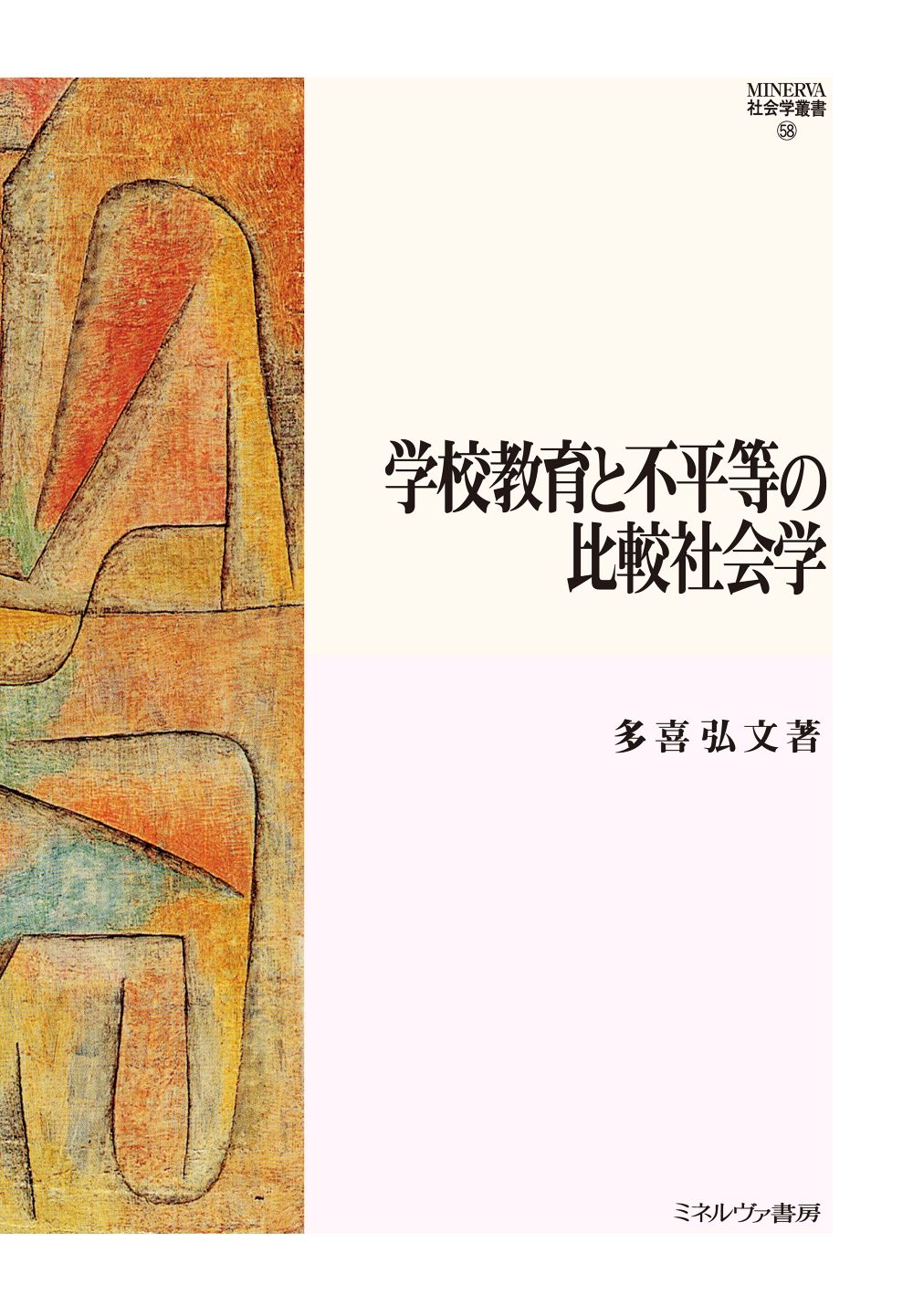
MINERVA Sociology Series 58 Gakko Kyoiku to Fubyodo no Hikaku Shakaigaku (Education and Inequality in Comparative Perspective)
Size
280 pages, A5 format
Language
Japanese
Released
February 20, 2020
ISBN
9784623070336
Published by
Minerva Shobo
Book Info
See Book Availability at Library
Japanese Page
This book examines inequality of educational opportunity in Japan, focusing on what is commonly referred to as educational inequality. Here, educational inequality is defined as differences in educational attainment that arise not from individual effort or choice, but from ascriptive factors—most notably family socioeconomic status (SES), including parental education, occupation, and income—factors that are largely determined before children make their own educational decisions.
The empirical analysis draws on microdata from the OECD Programme for International Student Assessment (PISA) and focuses on 15-year-old students, corresponding to first-year high school students in Japan. Three dimensions are examined: academic performance, educational aspirations regarding the highest level of schooling students wish to attain, and occupational expectations at age 30.
The findings identify three distinctive institutional features of Japan’s upper secondary education in international comparison. First, students are strongly sorted into hierarchically ranked schools based on academic performance at entrance examinations, a process that can be characterized as highly stratified. Second, this form of educational tracking is widely recognized and accepted across Japanese society, making it highly standardized. Third, these hierarchically ranked schools are only weakly connected to vocational skills or occupational qualifications and are therefore not vocationally oriented. Within this institutional context, students’ educational aspirations are intensified in a system that functions largely as an end in itself, regardless of their visions of future occupations. As a result, students’ educational trajectories are shaped less by occupational aspirations than by school allocation based on standardized academic achievement.
These institutional characteristics become clearer when Japan is contrasted with Germany and the United States. In Germany, schools are closely integrated with occupational apprenticeship systems, and students are strongly stratified into different school types from an early stage in accordance with anticipated occupational pathways. As has been well documented in prior research, educational tracking in Germany is both highly standardized and vocationally oriented.
By contrast, in the United States, the strong autonomy of local school districts and the absence of a nationally shared framework for educational tracking have long been noted in the literature. As a result, previous studies have shown that neither strong stratification nor a standardized nationwide structure of educational competition tends to emerge.
Through this comparative analysis using OECD data and analytical frameworks, the book demonstrates that institutional context shapes the generational process of educational inequality in different ways across societies, both theoretically and empirically. This approach situates Japan’s educational system within a broader comparative perspective while also offering insights into how it might be evaluated and reformed.
The book makes two further contributions. First, it draws systematically on secondary analyses of publicly available international datasets, enabling empirical cross-national comparison despite long-standing constraints on the collection of large-scale family background data in Japan. Second, rather than treating “the West” as a homogeneous reference point, it pays careful attention to diversity across national contexts. By avoiding both the mechanical application of Western theories and narratives of Japanese exceptionalism, the book advances a comparative sociological approach to understanding education and inequality.
(Written by TAKI Hirofumi, Associate Professor, Graduate School of Education / 2025)
Related Info
The 12th Award for Excellence in Research Activity, Japanese Association for Social Research (Japanese Association for Social Research Nov 26, 2022)
https://jasr.or.jp/english/activities.html
The 9th Encouragement Award (Book Category), Japan Society of Educational Sociology (The Japan Society of Educational Sociology 2020)
https://jses-web.jp/jses-en
Webinar:
Kyoto U Global Education Office 2021 Webinar Series 1 Hirofumi Taki (Hosei University) Sept 27, 2021
Lecture 1 Theorizing from Japan and East Asia in comparative sociology of education: Beyond particularism and quasi-universalism (Kyoto-U OCW May 30, 2022)
https://www.youtube.com/watch?v=2N49FAfdkfk